
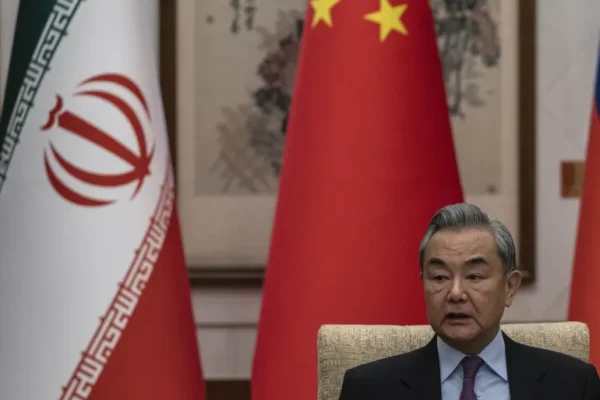
In a significant diplomatic development amid escalating regional tensions, Iranian Foreign Minister Abbas Araghchi reached out to China’s top diplomat Wang Yi with a crucial assurance. During their Monday conversation, Araghchi personally guaranteed that Tehran would take every possible measure to protect Chinese citizens and facilities currently in Iran, as the country finds itself under active military assault from US and Israeli forces. The promise wasn’t just diplomatic nicety—it came with the weight of a nation fighting for its survival, with Araghchi reportedly emphasizing that Iran is defending “itself at all costs.”
The timing of this call speaks volumes about the rapidly deteriorating situation in the Middle East. Just hours before the attacks commenced on Saturday, optimism had been building around potential peace talks. Oman’s foreign minister, who had been facilitating indirect negotiations between Washington and Tehran, had gone on record saying a peace deal was “closer than ever.” That hopeful assessment was shattered when US and Israeli forces launched what Iran describes as a “surprise attack”—the second military confrontation during what Tehran thought were ongoing, productive negotiations.
Araghchi didn’t mince words about the paradox of the situation. Despite both sides having made “positive progress in the latest round of negotiations,” Washington had apparently chosen the path of war. With no viable alternatives left, Araghchi conveyed to Wang that Iran had “no choice but to defend itself.” But beyond stating Iran’s position, he looked to Beijing for something more—a constructive role in preventing this conflict from spiraling into a full-blown regional catastrophe that could engulf the entire Middle East.
China’s response, as articulated by Wang Yi, struck a careful balance between supporting its strategic partner and calling for de-escalation. Wang explicitly urged the US and Israel to “immediately cease military actions,” warning about the dangers of the conflict expanding across the region. He reaffirmed Beijing’s backing for Iran’s right to safeguard its sovereignty, security, and “national dignity”—language that carries particular weight given the circumstances. The Chinese foreign minister also made a point of acknowledging the “traditional friendship” between the two nations, signaling that their relationship transcends mere transactional diplomacy.
This isn’t just diplomatic theater. The bond between Beijing and Tehran runs deep, anchored in practical cooperation that has only strengthened over recent years. China has consistently worked to break Iran’s international isolation, championing its membership in both the BRICS+ bloc—that coalition of major emerging economies—and the Shanghai Cooperation Organisation. Their 2021 strategic agreement, spanning 25 years, formalized what had already become a comprehensive partnership built on mutual need and shared interests.
Perhaps nowhere is this relationship more tangible than in the energy sector, where China has become absolutely indispensable to Iran’s survival under crushing sanctions. London-based analyst Ahmed Aboudouh, from the Chatham House think tank, points to staggering numbers that illustrate this dependency. Throughout 2025, China purchased more than 80 percent of all Iranian oil shipped by sea, absorbing roughly 13.5 percent of its total seaborne oil imports from Tehran alone. In Aboudouh’s assessment, China isn’t just a trading partner—it’s “a lifeline for the Iranian economy” keeping the country afloat when much of the world has turned away.
The call between these two foreign ministers, then, represents far more than routine diplomatic consultation. It’s a conversation between two nations whose fates have become increasingly intertwined—one fighting for its survival amid devastating attacks, the other wielding considerable influence as a global power with the ability to shape how this crisis unfolds. With Iran promising to shield Chinese nationals and interests, and China calling for restraint while implicitly backing Tehran’s right to defend itself, this exchange may well set the tone for how the international community navigates what could become one of the most dangerous conflicts in recent Middle East history.