How Dablinker's Banner Ads Monetisation Works?
Turning your website traffic into real money shouldn't require a degree in computer science or weeks of setup. At Dablinker, we built our banner advertising system to be as simple as copying and pasting a few lines of code, while packing serious anti-fraud protection under the hood so every impression and click you earn is legitimate.
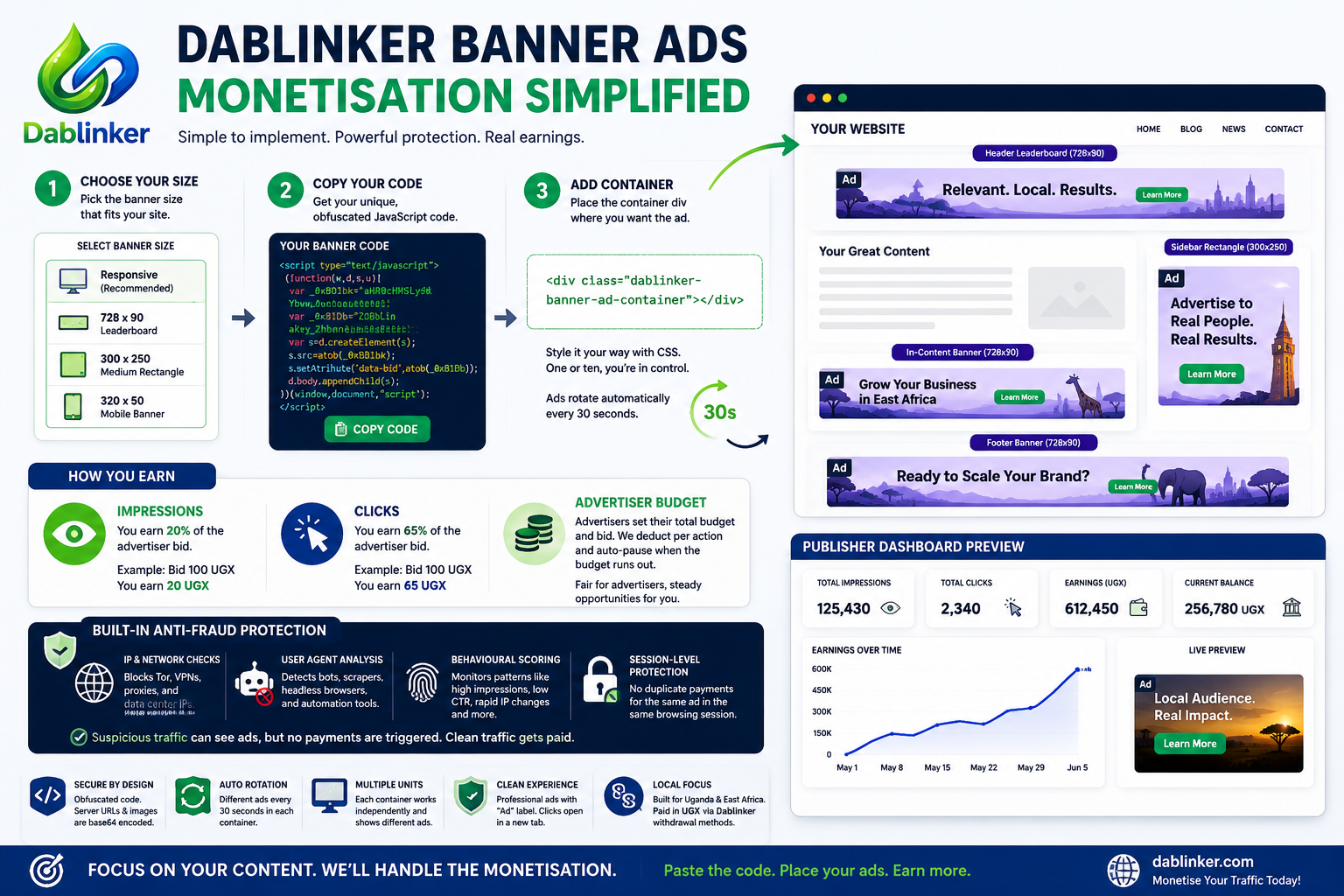
The first thing you do is head over to the Banner Ad Codes page in your publisher dashboard. Here you will see a grid of banner sizes to choose from. Maybe you want a responsive banner that automatically adapts to any screen width, a classic 728 by 90 leaderboard for the top of your blog, or a 300 by 250 medium rectangle that fits neatly in your sidebar. You tap the size you want and the system instantly generates your unique obfuscated JavaScript code. Notice I said obfuscated. That means nobody inspecting your website source code can see the actual server URLs or image paths. Everything is encoded and fetched dynamically when a visitor loads your page.
Copy that code and paste it just before the closing body tag on every page where you want banners to appear. Then add a simple div container wherever you would like the ad to display. That container uses the class dablinker-banner-ad-container and you can style it however you like with CSS. You can have one banner or ten, and each container will rotate through different advertisements automatically every thirty seconds. You do not need to touch the code again unless you want to change the banner size later.
Now let me explain how you actually earn money from this. Every time a real human visitor loads your page and sees a banner, that counts as an impression. Dablinker pays you twenty percent of whatever the advertiser bid for that impression. So if an advertiser paid one hundred shillings for the impression, twenty shillings goes straight into your account. That happens automatically in the background while the visitor is still scrolling your content.
When the visitor clicks the banner, you earn a much larger share. Clicks pay out sixty-five percent of the advertiser bid to you as the publisher. The remaining thirty-five percent goes to the platform. This means a single click can be worth significantly more than dozens of impressions, which rewards publishers who place ads thoughtfully in high-engagement areas of their site.
The payment structure protects advertisers too. They set a total budget and a bid per impression when creating their campaign. The system deducts from their remaining balance with each paid action and automatically pauses or completes their ad when the budget runs out. This ensures advertisers only pay for real results and publishers always have a fresh rotation of active campaigns to display.
Fraud is the enemy of any advertising network, and Dablinker takes it seriously. Before any impression or click is counted and paid, the system runs multiple silent checks in milliseconds. It looks at the visitor's IP address and checks whether it comes from a known Tor exit node, a cloud data center like AWS or Google Cloud, or a commercial VPN range. If the IP looks like it belongs to a server rather than a real person browsing from home or a mobile network, the system flags it.
The server also examines the browser user agent string. Bots, scrapers, automated scripts, and headless browsers announce themselves through patterns in this string. Python requests, cURL commands, Puppeteer scripts, and similar tools are caught and blocked before they can generate a single paid impression.
Beyond immediate checks, the system builds a reputation score over time. If the same device fingerprint appears from dozens of different IP addresses within an hour, that looks like proxy rotation and the score jumps. If an IP generates over a hundred impressions but has a click-through rate near zero, that suggests automated refreshing rather than genuine human browsing. These behavioural signals add up and when a visitor crosses the threshold into suspicious territory, they can still see the ads but no payments are triggered. The advertiser does not lose budget to fake views and the publisher's earnings remain clean and undisputed.
Duplicate payments are prevented at the session level. Once your affiliate code has earned an impression or click for a specific advertisement in a visitor's browsing session, that same action will not pay again even if the visitor refreshes the page repeatedly. This is handled server-side so there is no clever way around it from the browser.
All of this happens silently. Your website visitors see a clean banner ad with a small Ad label in the corner, styled to look professional and blend naturally with your content. When they click, the system logs the click, processes your payment, and redirects them to the advertiser's landing page in a new tab. If anything goes wrong, they simply end up at the Dablinker homepage rather than a broken link.
The code itself is secure by design. Server URLs and image paths are base64 encoded in the JavaScript snippet, and the actual banner content is fetched server-side only when needed. Nobody can scrape your source code to discover where ads are served from or attempt to manipulate the tracking.
From your publisher dashboard you can monitor your total clicks and earnings in real time. The stats cards update as you earn, and you can see your current balance grow. There is a live preview panel right on the code page so you can check that banners are displaying correctly before pasting the code onto your live site.
For publishers placing multiple ad units on the same page, each container operates independently and will display different advertisements simultaneously. The round-robin distribution system ensures fair rotation across all active campaigns, giving every advertiser their share of impressions while keeping your ad spaces filled.
Placement matters for performance. The How to Place Banner Ads section in your dashboard shows examples of the most effective positions. A banner just below your site header catches visitors immediately. One embedded between paragraphs of a long article interrupts the reading flow naturally. A sidebar placement stays visible as the visitor scrolls. And a footer banner captures attention from those who read to the end. Each position suits different banner sizes and you can experiment freely since the code is the same regardless of where the container div sits in your HTML.
Troubleshooting is straightforward. If a banner does not appear, the most common fix is making sure the JavaScript code appears after the container divs in your page source. The script needs the containers to exist in the document before it can populate them. If you change your mind about the banner size, simply select a different size from the dashboard and copy the updated code. The old code will not automatically resize, you must replace it. For multiple banners showing the same ad, double check that each container is a separate div. Identical containers share the same ID space and can conflict.
The system is built for Uganda and the broader East African market, supporting UGX as the primary currency with payments processed through the same withdrawal methods available across the Dablinker platform. Whether you run a news blog, a sports site, a technology forum, or any content website with regular traffic, the barrier to entry is literally copying and pasting a few lines.
What makes this different from embedding Google AdSense or other global networks is the local focus. Advertisers on Dablinker are targeting audiences in this region, which often means higher relevance and better engagement for your visitors. The bids are structured in UGX and the payment splits are transparent and fixed. You always know exactly what percentage you will earn.
The combination of simple implementation, transparent payments, and robust fraud protection means you can focus on creating great content and growing your audience while the monetisation handles itself. Every thirty seconds your banners refresh with a new relevant advertisement and every legitimate interaction adds to your balance.